Image by: Knelstrom Media
Britain reaches for the kettle as reservoirs begin wheezing
By Martin Foskett, Reporter
PUBLISHED:
UPDATED:
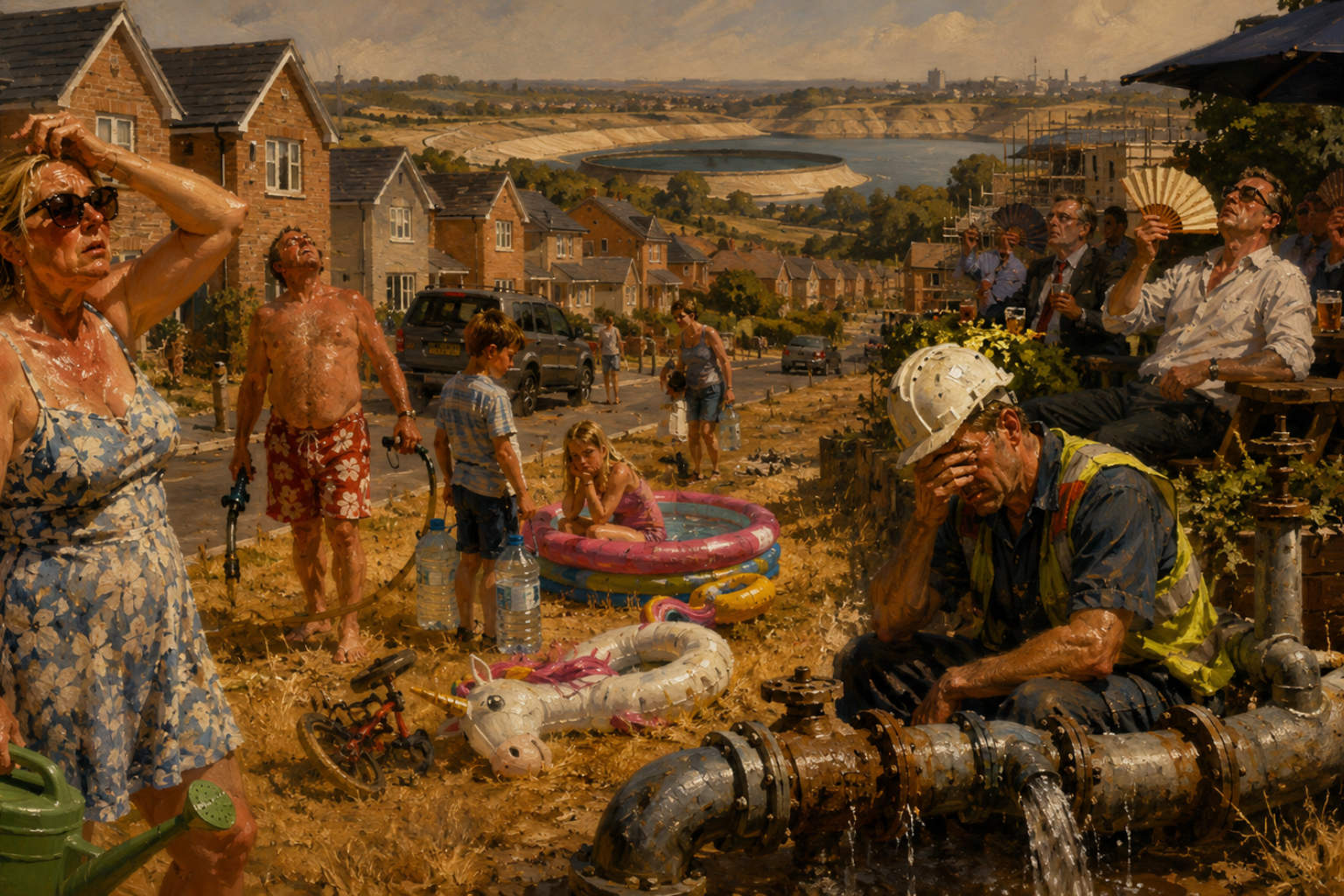
Pressure is dropping. Showers are spluttering. Somewhere in the Home Counties, a man in salmon-coloured shorts is staring at a motionless garden sprinkler as though betrayed by civilisation itself.
The warning arrived with the familiar tone of modern British utilities. Calm. Measured. Slightly apologetic. Like a headmaster announcing there will be no pudding because the custard budget has been misplaced. Residents were urged to restrict usage to essential activities such as drinking, cooking and washing. The implication hung in the air like damp washing over a caravan park. Britain, allegedly one of the largest economies on earth, cannot currently cope with too many people filling paddling pools at once.
The timing could not have been more British if it had arrived, wrapped in condensation, beside a collapsing rail replacement service.
The first proper hot spell of the year landed on the country with the usual national composure of an overheated Labrador trapped in a conservatory. Supermarkets rapidly lost entire shelves of bottled water. Ice cubes became speculative assets. Garden centres filled with retirees dressed for the Normandy landings. Every pub beer garden from St Albans to Harlow transformed into a sprawling arena of burnt sausages, pink shoulders and exhausted parents pretending inflatable crocodiles represent wholesome family memories.
And beneath the seasonal delirium sat the old infrastructure problem. Ancient pipes. Leaks. Underinvestment. Expanding populations. Endless housing developments are appearing across the South East like fungal growth after rain. Thousands upon thousands of new homes are approved by planners who speak enthusiastically about sustainable communities while apparently assuming water arrives by optimism alone.
Britain possesses one of the oddest political contradictions in Europe. The public demands Scandinavian-quality infrastructure while simultaneously revolting at the idea of reservoirs, pylons, rail upgrades, road expansions, or anything else visible from the kitchen window. Entire county meetings descend into operatic hysteria over the prospect of a new water storage site disturbing the migration patterns of extremely contented geese. Then August arrives, and everybody wonders why the pressure drops every time someone starts a dishwasher in Stevenage.
Affinity Water insists crews are working around the clock to manage demand. Tankers move across the region. Engineers monitor networks under strain. Somewhere in a fluorescent control room sits a man with three monitors and the haunted complexion of somebody who has not experienced joy since privatisation. He watches graphs spike upward as half the Southeast simultaneously decides to wash the car before a barbecue.
None of this emerged overnight. Industry figures have warned for years that Britain’s water network was drifting toward strain. Population growth across London and the South East has been relentless. New estates rise from former farmland with names like Willow Chase and The Orchards, despite containing neither willows nor orchards. Tiny patches of decorative grass wilt outside rows of identically rendered homes while estate agents describe them as luxury countryside living.
The mathematics behind the pressure crisis is brutally simple. More people. More heat. More consumption. The same ageing system underneath.
Meanwhile, political conversation remains trapped between ideological trench warfare and performative outrage. One side screams about privatisation as though nationalisation would magically summon Victorian engineers from the grave, with rolled blueprints and cast-iron determination. The other side talks endlessly about market efficiencies while leakage figures continue spilling enough water annually to refill entire reservoirs. Everybody appears furious. Nobody appears capable of building anything quickly.
The weather itself has become part of the instability. British summers now swing between biblical rainstorms and strange Mediterranean heatwaves, leaving suburban England looking faintly bewildered. Office workers stagger onto commuter trains, carrying handheld fans, with the desperate expressions of refugees escaping an oven. Asphalt softens. Foxes lie flat in alleyways like discarded rugs. Every local news programme sends a sweating correspondent to stand beside a thermometer outside a pharmacy.
Yet the spike in demand reveals something deeper about the national condition. Britain increasingly functions like an exhausted middle manager pretending everything remains under control while quietly selling the furniture. Infrastructure creaks everywhere. Roads crack open after mild frost. Railway signals collapse during drizzle. Airports descend into panic when someone misplaces a spreadsheet. Hospitals run out of beds every winter with the ritual predictability of Christmas decorations appearing in November.
And now even water arrives with caveats.
The language of restraint has also returned with remarkable speed. Citizens are encouraged to reduce consumption for the greater good. Shorter showers. Fewer hoses. Delayed laundry. One almost expects ration books and public information films narrated by stern men smoking Players cigarettes beside reservoirs. Somewhere in Britain this week, a child has almost certainly been scolded for leaving a tap running while an exhausted father mutters darkly about taxes.
Still, the public response remains peculiarly British. Mild irritation mixed with fatalistic acceptance. Social media was immediately filled with photographs of dry grass, weak showers, and supermarket queues. Several men named Darren blamed immigration. Several women named Claire blamed capitalism. A retired plumber from Watford blamed everybody under forty. The national discussion unfolded exactly as expected.
Meanwhile, the real issue lurks beneath the comedy. Britain has spent decades drifting into a strange anti-building paralysis while demand continues to climb relentlessly. Reservoir projects take years. Planning objections multiply like algae in stagnant ponds. Environmental reviews expand into biblical manuscripts. Infrastructure becomes politically radioactive because modern governance fears visible disruption more than long-term decline.
The result is a country permanently operating one hot weekend away from logistical embarrassment.
Even the geography feels symbolic. The South East remains the economic engine of Britain, swollen with commuters, finance workers, logistics hubs and endless housing pressure. It is rich on paper yet increasingly threadbare underneath. Luxury apartment blocks rise beside Victorian pipes. New business parks emerge while roads buckle under traffic designed for another century. It resembles a prosperous man wearing polished loafers over collapsing knees.
There is also something darkly comic about asking modern Britain to consume less water while every advertisement in existence urges endless consumption of everything else. Buy more. Upgrade more. Install larger hot tubs. Build outdoor kitchens. Wash the SUV twice weekly, as pollen has settled on the bonnet. The economic model depends on permanent appetite, while infrastructure quietly begs everyone to calm down.
No government truly wants to confront this contradiction because the solutions are expensive, disruptive and politically poisonous. Reservoirs anger locals. Pipe replacement costs fortunes. Long-term planning extends beyond election cycles. It is easier to issue guidance asking households not to fill inflatable unicorn pools for a fortnight.
The heatwave itself will eventually break. Britain always returns to drizzle eventually. Grey clouds will roll back over Essex retail parks. Garden furniture will rot quietly beneath tarpaulins. The nation will complain about flooding by October. Yet these pressure warnings will keep returning because the underlying strain is structural, not seasonal.
That reality hangs over modern Britain like humidity before a storm. The country still talks like a global heavyweight while increasingly managing decline through polite notices and temporary restrictions. Water pressure warnings today. Rolling blackouts tomorrow. Perhaps by 2032, there will be government guidance urging residents to avoid charging kettles simultaneously during Wimbledon.
For now, households across the Affinity Water region are being asked to keep usage to essentials while engineers work to manage demand. The request itself sounds reasonable enough. Most people will comply. The paddling pools can wait. Lawns can turn yellow. Cars can remain dusty for a few days.
But somewhere beneath the warm pavements and crowded estates lies a larger truth about twenty-first-century Britain. A nation once capable of building vast docks, railways, tunnels and reservoirs now struggles to maintain enough pressure for an evening shower after a sunny afternoon.
The empire of steam has become the kingdom of politely rationed hosepipes.