Image by: Knelstrom Media
What Six Weeks Can Build
By Martin Foskett, Reporter
PUBLISHED:
UPDATED:
Six weeks is an absurdly short amount of time to build anything worthwhile. You can barely persuade a lawn to grow properly in six weeks. A government department would still be organising its first stakeholder consultation. Somewhere in Silicon Valley, there would probably be a launch event, three podcasts and a £40 million funding round before anyone remembered they were supposed to build an actual product.
Yet here we are.
Six weeks ago, the Elsenham Herald existed only as a domain name, a notebook filled with increasingly ambitious ideas and the sort of misplaced optimism that usually precedes either a spectacular success or an equally spectacular lesson in humility. I didn’t know precisely what the Herald would become because, if I’m honest, nobody ever does when they start building something from nothing. I simply knew what I believed our villages deserved: a proper local news website that took them seriously.
That sounds wonderfully straightforward until you actually try it.
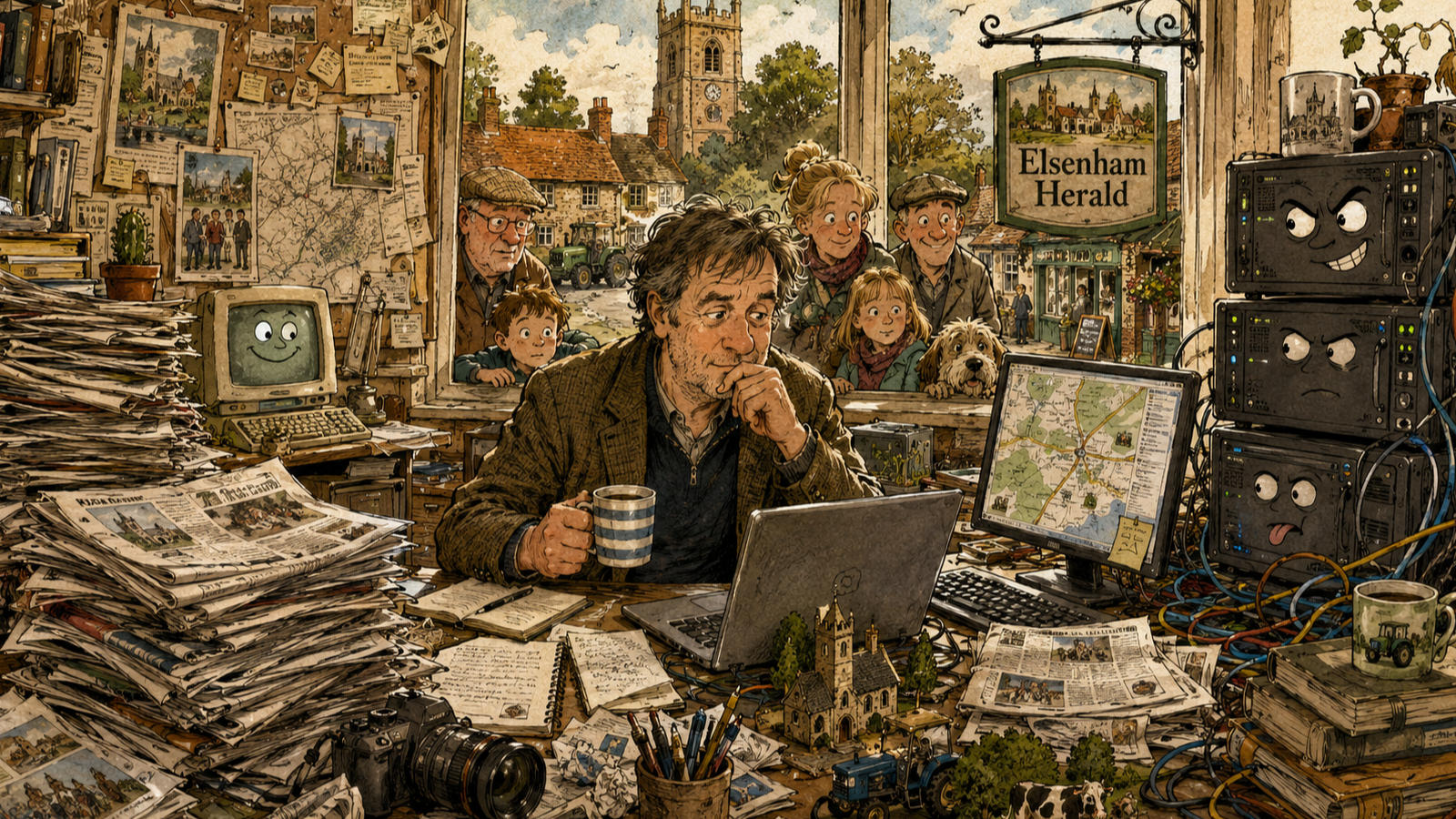
People imagine that launching a local news website is mostly about writing articles. They picture somebody sitting at a desk with a laptop, a mug of tea cooling beside the keyboard and perhaps the occasional dramatic dash to a parish council meeting before returning triumphantly to publish another masterpiece of local journalism. It is an attractive image. It is also complete fiction.
Writing, as it turns out, occupies only a fraction of the job.
The rest involves wandering into the strange mechanical underworld that powers the modern internet, where servers sulk for reasons they refuse to explain, security certificates behave like overzealous customs officers, and search engines inspect your brand new website with all the enthusiasm of a suspicious librarian who has just caught somebody trying to shelve a comic book among the encyclopaedias.
There were domains to register, databases to configure, advertising systems to integrate and directories to design. Social media accounts need to be established. Email authentication became a small saga in its own right. Every time one technical problem finally surrendered, another emerged from the shadows wearing a different disguise and carrying fresh opportunities to question my life choices.
There were moments when I became entirely convinced that the internet had organised itself into a committee whose sole purpose was to prevent the Elsenham Herald from existing.
Fortunately, technology eventually exhausts itself. It cannot invent new ways to be awkward forever.
Slowly, almost imperceptibly, things started falling into place.
The homepage began to resemble something people might actually want to visit rather than an abandoned building site littered with broken links and placeholder text. Search engines finally acknowledged that the Herald wasn’t an elaborate practical joke. Pages loaded properly. Systems began speaking politely to one another instead of exchanging what felt suspiciously like passive-aggressive emails behind my back.
Most importantly, the reporting never stopped.
While the technical machinery quietly demanded attention behind the scenes, the reason for building the Herald in the first place remained exactly the same. Villages were still holding parish council meetings. Planning applications were still being submitted. Road traffic collisions still occurred. Community groups still organised events. RAF aircraft continued passing overhead from Stansted, prompting the familiar ritual of people stepping into their gardens and looking skywards with equal measures of curiosity and speculation.
Life, in other words, carried on.
Somebody still needed to report it.
That, ultimately, is why the Herald exists.
Not because the internet desperately needed another website, but because too much local journalism has quietly disappeared over the last decade. Newsrooms have shrunk, reporters have been spread across increasingly vast areas, and countless villages have found themselves existing somewhere beyond the edge of routine coverage. None of this happened through malice. Economics has a habit of ignoring sentiment, and local journalism has endured more than its fair share of harsh arithmetic.
The result, however, is impossible to ignore.
When nobody is regularly recording the ordinary rhythm of village life, rumours become news remarkably quickly. Facebook posts acquire the authority once reserved for court transcripts. Somebody’s cousin’s neighbour apparently becomes the leading authority on everything from planning law to aircraft operations, despite having demonstrated only a passing acquaintance with either.
Communities deserve better than that.
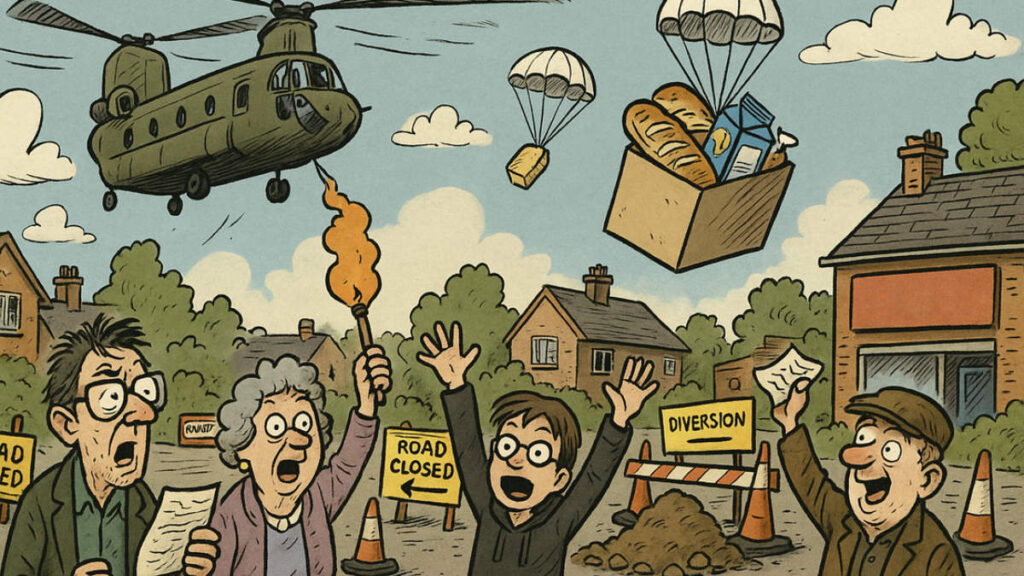
Local journalism has never been about chasing celebrities or competing with rolling television news. Its value lies somewhere quieter. It records the decisions that affect ordinary lives. It tells people why the road outside their house has been closed for three weeks. It explains planning proposals before the diggers arrive. It introduces neighbours to businesses they never realised existed five minutes away. It reminds us that villages are living places rather than clusters of houses connected by roads.
That philosophy shaped every part of the Herald.
The Business Directory wasn’t created simply because websites are expected to have directories. It exists because independent businesses, working farms, artists, charities, clubs and community organisations deserve somewhere to be discovered without disappearing beneath pages of national search results and multinational advertising budgets. If somebody in Elsenham needs a local electrician, fresh eggs from a nearby farm or a photographer who lives two villages away, it ought not to require detective work worthy of Scotland Yard.
The Events section emerged from exactly the same line of thinking.
Every village seems to possess an extraordinary ability to organise wonderful community events while simultaneously keeping them a closely guarded secret until the day they happen. Summer fêtes, charity fundraisers, live music, football tournaments, open gardens and coffee mornings somehow appear on the calendar with astonishing regularity, yet countless residents discover them only after seeing photographs of everyone else enjoying themselves.
That always seemed a terrible waste.
A community event hidden from the community rather defeats the object.
So the Herald set out to build a place where those events could be found just as easily as the latest planning application or council report, because village life is measured every bit as much by church fêtes and craft fairs as it is by committee meetings and official notices.
Of course, six weeks is hardly enough time to build everything.
The audience remains small because the Herald has barely begun introducing itself beyond its own doorstep. That is neither surprising nor especially concerning. Every worthwhile publication begins life in relative obscurity. There is something faintly comical about expecting thousands of readers to appear overnight simply because a new website quietly opened its digital front door.
Trust doesn’t arrive with a marketing campaign.
It arrives with one accurate report at a time.
One useful directory listing at a time.
One community event at a time.
One story that somebody would otherwise never have known at a time.
Looking back over these first six weeks, I suspect the greatest lesson has very little to do with journalism and rather more to do with human nature. We have become remarkably skilled at convincing ourselves that we must wait until everything is perfect before beginning. The perfect design. The perfect feature set. The perfect business model. The perfect moment.
The perfect moment, in my experience, is usually running about twenty minutes late and having forgotten to bring half the paperwork.
Had I waited until every page was flawless, every feature complete, and every uncertainty neatly resolved, the Elsenham Herald would still be nothing more than an unfinished idea hiding inside a notebook.
Instead, it exists.
Not as a finished product, because nothing worth building is ever truly finished, but as a living publication that will continue to grow with every article, every directory listing, every event submission, and every piece of local history rescued before it quietly disappears into memory.
There are still countless stories waiting to be told. More businesses to welcome into the directory. More organisations to discover. More village events to promote. More history to uncover. More questions to ask and, no doubt, an entirely fresh collection of technical gremlins waiting patiently for the precise moment I begin feeling confident again.
That is perfectly acceptable.
Building something worthwhile has never been about reaching the finish line.
It has always been about deciding the work is worth continuing tomorrow morning.
Six weeks ago, there was only an idea and a domain name.
Today, there is the Elsenham Herald.
Its best reporting still lies ahead, its community is still gathering, and its story has barely begun.
If the next six weeks prove half as interesting as the first, I suspect we’re only just getting started.

Author: Martin Foskett
me