
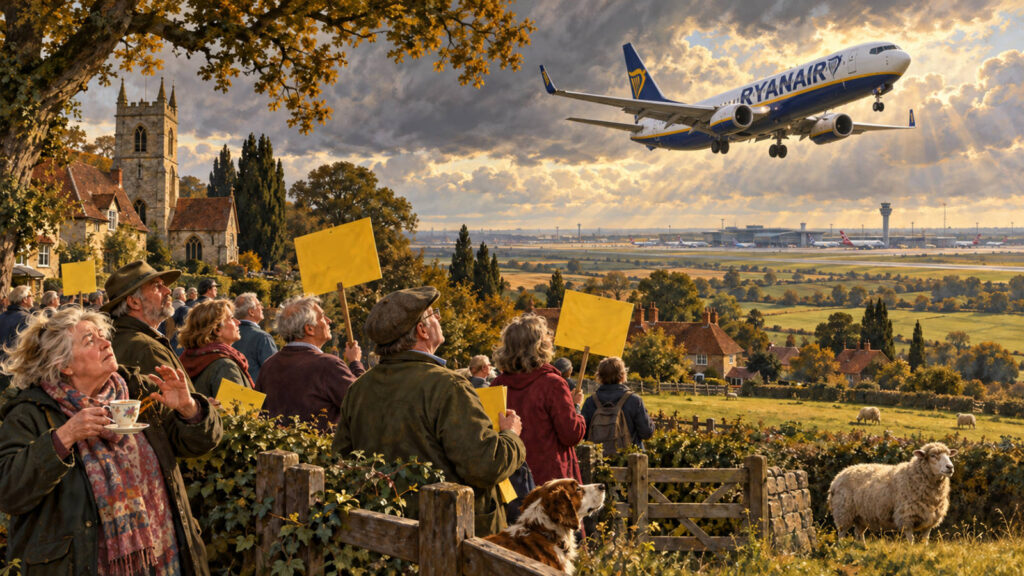
The rise and fall of Stop Stansted Expansion.
Image by: Knelstrom Media The rise and fall of Stop Stansted Expansion. By Martin Foskett, Reporter PUBLISHED: UPDATED: The campaign
Image by: Knelstrom Media The rise and fall of Stop Stansted Expansion. By Martin Foskett, Reporter PUBLISHED: UPDATED: The campaign
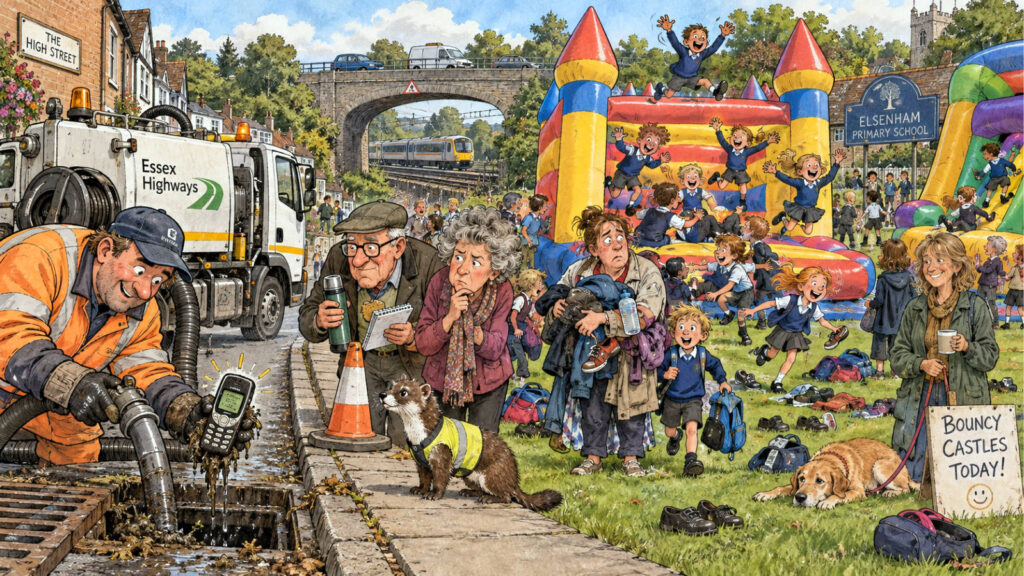
Wednesday morning arrived in Elsenham with the unmistakable atmosphere of a population being returned to government supervision. From around 08:00, after six weeks of bicycles, footballs, late breakfasts, unexplained shouting and children appearing from hedges carrying sticks of uncertain strategic value, the school run began. Pavements filled with new shoes, oversized jumpers, immaculate book bags and parents attempting to remember how mornings worked. Somebody had forgotten a water bottle. Another family was conducting an emergency search for a PE kit last seen somewhere around July, while cars began performing the familiar low-speed choreography of September as adults rediscovered that leaving the house at roughly the same time as everyone else has consequences.

July has settled over Elsenham with all the restraint of a patio heater pointed directly at the village. Day after day, the same enormous orange sun has sat overhead, refusing to budge. At the same time, gardens that only a few weeks ago looked like postcards from the English countryside have quietly surrendered. Lawns have turned the colour of old cereal, flower beds are conducting a daily battle for survival, and every conversation now begins with someone saying, “It’s not the heat. It’s the lack of rain,” before immediately agreeing that actually it is both.

The names recorded on Elsenham’s Roll of Honour are more than a list of those who served during the First World War. Together they provide a record of a village whose people answered the call to serve between 1914 and 1919, and of the families whose lives were permanently changed by the conflict.

Look up at an old thatched cottage, and there is every chance the finest piece of craftsmanship is not the roof itself, but the small ornament standing proudly along its ridge.

There comes a point every summer when the village collectively stops asking whether the roadworks are finished and instead begins asking which road has volunteered itself next. June has now answered that question with the confidence of a man arriving at a barbecue carrying only an empty plate. The operational map has shifted once again. New Road is preparing to disappear behind barriers for five days; temporary traffic lights have multiplied like particularly determined rabbits; Stansted’s approaches remain wrapped in utility works; the M11 Junction 8 continues its nightly impression of organised confusion; and even Tye Green Road has received official notice that its turn is coming. Somewhere inside Central Operations Command, someone quietly unfolded a larger map.

At the start of the millennium, Elsenham was a village of around 2,500 people. Surrounded by farmland and characterised by its railway station, historic core and close proximity to Stansted Airport, it occupied a distinctive position between rural Essex and a rapidly changing regional economy.

“The Robin Hood” Public House in, surprise, surprise, Robin Hood Road is sadly no longer an Inn, once the spiritual home of the also-gone, but never-forgotten Elsenham Football Club. Sorry to say, the demise of the Village’s Eleven contributed to its demise. Our own “Footy” boys drank the Pub dry at least once. Their disbanding was a great loss to Ernie & Rennee Atkinson’s income.

May arrived in Elsenham carrying two developments that nobody had expected to encounter at the same time. The first was sunshine. The second was optimism. Both were regarded with immediate suspicion.

March arrived in Elsenham with the reassuring certainty that somewhere, in some hedgerow-framed corner of the village, a minor administrative situation was quietly escalating into something with the energy of a diplomatic incident. As the month unfolded, reports filtered through Tesco aisles, Central Operations Command briefings, and the allotment grapevine that several operational theatres had opened simultaneously, each insisting on attention, none willing to wait their turn, and all now complicated by the growing sense that even the weather had joined the agenda.